

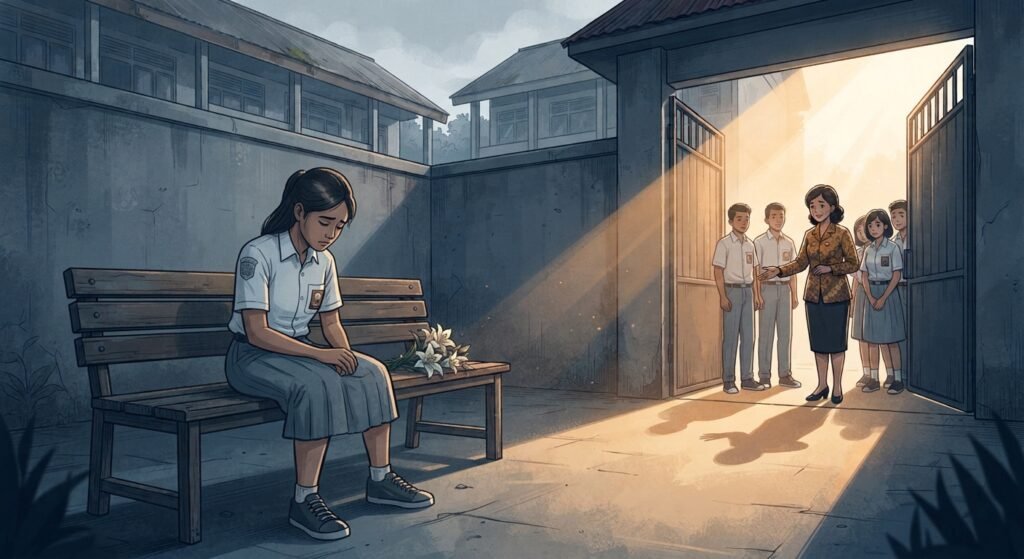
MALANG | JATIMSATUNEWS.COM: The sudden and tragic death of a 17-year-old high school student in Malang City has ignited a fierce national debate over youth violence, peer bullying, and the adequacy of child protection frameworks in Indonesia.
Silva Nur Intania Putri, a twelfth-grade student at SMA Negeri 7 Malang, passed away late Wednesday night, November 25, 2026, following an alleged group assault by several teenagers in the Kedungkandang district.
The incident, which quickly gained widespread attention across social media platforms and local news outlets, has prompted immediate intervention from regional law enforcement, the East Java Provincial Education Office, and top government officials.
As investigators work to reconstruct the exact sequence of events and establish legal accountability, educators and policymakers are looking both inward at domestic oversight gaps and outward at how other nations confront severe youth bullying.
Highlights
Tragedy at SMAN 7 Malang
Chronology of the Malang Incident
According to preliminary statements from the Malang City Police (Polresta Malang Kota), the tragedy unfolded on the evening of November 25, 2026.
Silva, who resided in the Balearjosari area of Blimbing District, was picked up from her home around 7:30 PM WIB by two female acquaintances, identified by their initials SP (16) and IDH (17), riding together on a single motorcycle.
Family members noted that Silva had recently recovered from a heart inflammation condition and was feeling unwell that evening, though she ultimately left the house after telling her family she was visiting a friend.
The trio traveled to the Bulan Terang Utama (BTU) residential complex in Madyopuro, Kedungkandang District, arriving at approximately 8:00 PM WIB.
Police investigations indicate that upon arrival, while Silva was still seated on the motorcycle, other teenagers already waiting at the location pulled her off the vehicle.
Witnesses and investigators reported that the victim was subjected to repeated punches to the head and kicks, causing her to collapse and lose consciousness.
Following the assault, the perpetrators reportedly transported the weakened and unresponsive teenager to the residence of one of the suspects in the Lesanpuro area, where they attempted to revive her using cajuput oil.
Roughly ten minutes later, when another teenager checked on Silva and realized she was no longer breathing, the group decided to take her to Lavalette Hospital in Malang.
Medical personnel in the emergency room pronounced her dead upon arrival.
Her body was subsequently transferred to Dr. Saiful Anwar Regional General Hospital (RSSA) for a forensic autopsy to determine the exact medical cause of death.
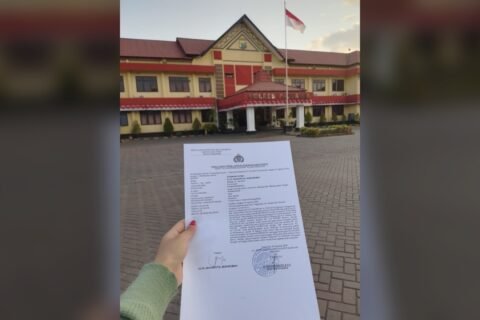
By Friday, November 27, 2026, Malang City Police Chief Senior Commissioner Danang Setiyo Pambudi confirmed that eight witnesses had been intensively questioned.
Four minors were identified as primary suspects in the assault, facing potential charges under Indonesia’s Child Protection Law, which carries a maximum penalty of 15 years imprisonment, processed in accordance with the Juvenile Criminal Justice System.
Read also: News of Gibran Resigning as Vice President Draws Attention from Foreign Media
Community Grief and Official Response
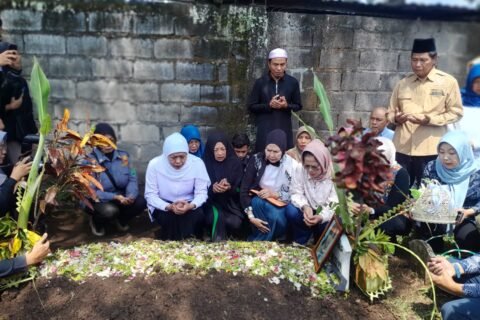
News of Silva’s passing sent shockwaves through SMAN 7 Malang and the broader community.
Teachers and classmates described Silva as a quiet, bright, and diligent student with strong proficiency in mathematics, English, and Japanese.
During a visit to the grieving family’s residence on Friday morning, East Java Governor Khofifah Indar Parawansa revealed that Silva had been preparing to pursue a university scholarship in South Korea—a dream abruptly cut short.
“Academically, her achievements were very commendable. We are all deeply grieving that one of our best young minds experienced such a tragedy,” Governor Khofifah stated, urging law enforcement to ensure full justice for the victim’s family.
Meanwhile, East Java Education Office Head Aries Agung Paewai called for a comprehensive evaluation of student supervision.
Emphasizing that the assault occurred outside school hours and off campus, Paewai stressed that preventing youth violence requires synchronized vigilance between schools, families, and local communities.
He instructed all high schools across Greater Malang and East Java to implement early detection protocols for student conflicts, cyberbullying, and social friction before disputes escalate into physical violence.
International Parallels
How Other Countries Confront Severe Bullying

The Malang tragedy echoes high-profile cases in other countries where peer aggression, social exclusion, or physical bullying resulted in the loss of young lives.
Across different jurisdictions, fatal incidents have repeatedly forced governments to overhaul school policies and criminal statutes.
The United States (The Case of Phoebe Prince and Tyler Clementi)
In 2010, the deaths of 15-year-old Phoebe Prince in Massachusetts and 18-year-old Tyler Clementi in New Jersey following relentless physical, verbal, and online harassment sparked nationwide outrage.
Prior to these incidents, many states treated bullying strictly as a school disciplinary issue rather than a criminal matter.
South Korea (The Daegu Middle School Tragedy)
South Korea has long grappled with severe school violence, known locally as hakpok.
In 2011, a 14-year-old middle school student in Daegu died by suicide after enduring months of physical extortion and beatings by classmates, leaving behind a detailed note documenting the abuse.
Canada (The Case of Rehtaeh Parsons and Amanda Todd)
In the early 2010s, the deaths of teenagers Amanda Todd and Rehtaeh Parsons in Canada highlighted how peer group hostility and digital harassment often intersect with physical intimidation, leaving victims isolated without institutional recourse.
Global Strategies and Legal Frameworks for Handling Youth Bullying

In response to such tragedies, several nations have moved beyond purely reactive school suspensions, adopting multi-tiered legal, educational, and psychological frameworks to deter youth violence:
• Strict Anti-Bullying Legislation and Criminal Accountability.
Following the death of Phoebe Prince, Massachusetts enacted one of the strictest anti-bullying laws in the United States.
The legislation mandates that school staff report any suspected bullying immediately, requires schools to investigate incidents promptly, and extends school jurisdiction to off-campus and online behavior if it creates a hostile environment for the victim.
In severe cases involving physical assault or coercion, prosecutors increasingly charge juvenile perpetrators with criminal offenses such as assault, battery, or manslaughter, balancing rehabilitation with strict accountability.
• Mandatory School Violence Committees and Permanent Record Consequences.
In South Korea, the Act on the Prevention of and Countermeasures Against Violence in Schools requires every school to operate an autonomous committee to investigate bullying allegations.
Proven perpetrators face mandatory counseling, community service, forced transfer to another school, or expulsion.
Crucially, severe school violence records are permanently documented on a student’s official academic transcript, directly impacting university admissions and future employment prospects—a powerful deterrent in a highly competitive society.
• Evidence-Based Prevention Programs (The KiVa Model).
Finland pioneered the KiVa anti-bullying program, now adopted across several European nations.
Rather than focusing solely on punishing the bully or counseling the victim, KiVa targets the bystanders—the peer group witnessing the conflict.
Through regular curriculum modules, role-playing, and digital simulations, students are trained to withdraw social approval from aggressors and support vulnerable peers, fundamentally altering the social dynamics that enable group assaults.
• Restorative Justice and Mandatory Parental Responsibility.
In countries like New Zealand and parts of Australia, juvenile justice systems utilize Family Group Conferences.
This restorative approach brings together the offenders, their parents, the victim’s family, school officials, and police to confront the harm caused and agree on binding reparations and behavioral monitoring.
Furthermore, several jurisdictions impose legal accountability on parents or guardians who fail to supervise minors placed under court-ordered behavioral curfews.
Read also: Nvidia Reinstates Co-Founder Jensen Huang as President and CEO in Dramatic Board Reversal
Moving Forward
Polresta Malang Conclude the Investigation

As police in Malang finalize their investigation and prepare case files for the prosecutor’s office, the death of Silva Nur Intania Putri stands as a sobering reminder that peer conflicts among teenagers can rapidly turn lethal.
Legal experts and child advocates in Indonesia note that while the Juvenile Criminal Justice System rightly prioritizes the future of minors in conflict with the law, effective deterrence requires transparent legal enforcement.
They also call for active parental involvement at home, and proactive early-warning systems within schools to protect vulnerable students before tragedy strikes.***
Author: YAN








Komentar Pembaca
Belum ada komentar pada artikel ini. Jadilah yang pertama.
Minimal 10 karakter, maksimal 1000. Maksimal satu tautan. Semua komentar ditinjau redaksi sebelum tampil.