

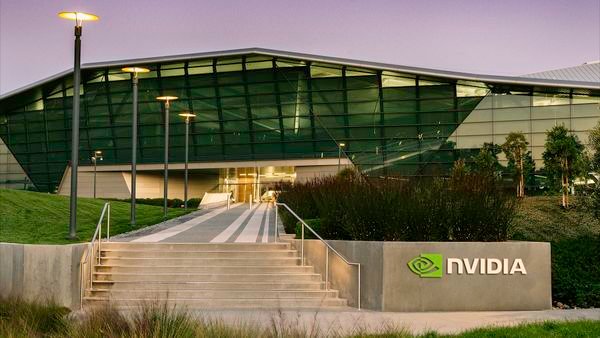
JAKARTA | JATIMSATUNEWS.COM: In a move that has sent shockwaves through Southeast Asia’s rapidly expanding digital infrastructure sector, American semiconductor giant Nvidia.
They have instructed its primary manufacturing partners to immediately suspend shipments of artificial intelligence (AI) servers to Indonesia, alongside Malaysia, Singapore, and Thailand.
The sudden freeze, first reported by the Financial Times on Thursday, November 26, 2026, follows aggressive new export restrictions issued by the United States Department of Commerce.
The decision aims to close off backdoor channels used by Chinese technology companies to access advanced American computing power.
Read also: Nvidia Reinstates Co-Founder Jensen Huang as President and CEO in Dramatic Board Reversal
Highlights
According to industry sources familiar with the directive, major server assemblers—including Dell Technologies and Super Micro Computer (Supermicro)—have formally notified enterprise buyers and cloud operators across the four Southeast Asian nations.
They stated that pending orders containing Nvidia’s high-performance AI chips are prohibited from leaving the factories.
While it remains unclear whether the suspension is a temporary measure while manufacturers navigate compliance protocols or a prolonged freeze.
The decision has already triggered widespread uncertainty across regional data center projects and financial markets.
Nvidia Halts AI Server Shipments to Indonesia
Closing the Southeast Asian Cloud Loophole

The catalyst for Nvidia’s decisive action stems from new regulatory rules introduced by the U.S. Department of Commerce’s Bureau of Industry and Security (BIS) on November 16.
The new rules officially took effect on November 19, 2026. Under the updated framework, exporters are now required to obtain special federal licenses before shipping advanced computing hardware to data centers in Indonesia, Malaysia, Singapore, Thailand, and Brazil.
For years, Washington has tightened direct export bans on cutting-edge semiconductors to mainland China over national security concerns.
However, U.S. officials determined that leading Chinese AI laboratories and tech conglomerates were circumventing these restrictions by leasing remote cloud computing capacity from data centers located in Southeast Asia.
By purchasing or renting server clusters equipped with Nvidia’s flagship graphics processing units (GPUs) through third-party regional hubs, Chinese firms were able to train large-scale AI models without physically importing the hardware into China.
The new BIS mandate directly targets this remote-access model. It gives cloud service providers in the affected countries a strict 90-day window to apply for export licenses and verify that none of their end-users are restricted Chinese entities.
However, industry executives warn that Washington has rolled out the mandate without clear operational guidelines.
Regional executives have criticized the lack of clear execution guidelines from Washington, describing the 90-day licensing window as a source of severe operational chaos.
This regulatory squeeze follows a brief leadership upheaval at Nvidia involving CEO Jensen Huang and a Singaporean firm under scrutiny for alleged chip smuggling.
Although Huang was reinstated, Nvidia has maintained a rigid compliance stance.

The fallout is already impacting major regional agreements, such as a frozen $500 million credit facility for Singapore-based Aolani, which had been planning to lease computing resources to ByteDance.
It also threatens broader hyperscale data center investments across Indonesia and Malaysia.
Airlangga Hartarto’s Response
In response, Indonesian Coordinating Minister for Economic Affairs Airlangga Hartarto sought to reassure markets, stating that domestic projects are insulated by the U.S.–Indonesia Agreement on Reciprocal Trade (ART) and its digital clause.
Airlangga emphasized that imported chips are strictly for domestic infrastructure rather than unauthorized transshipment, and noted that consumer hardware is exempt from the server freeze.
Nevertheless, analysts warn that prolonged delays could stall Indonesia’s sovereign AI development and force operators toward alternative chip architectures while waiting for regulatory clarity.***
Author: YAN












Komentar Pembaca
Belum ada komentar pada artikel ini. Jadilah yang pertama.
Minimal 10 karakter, maksimal 1000. Maksimal satu tautan. Semua komentar ditinjau redaksi sebelum tampil.