

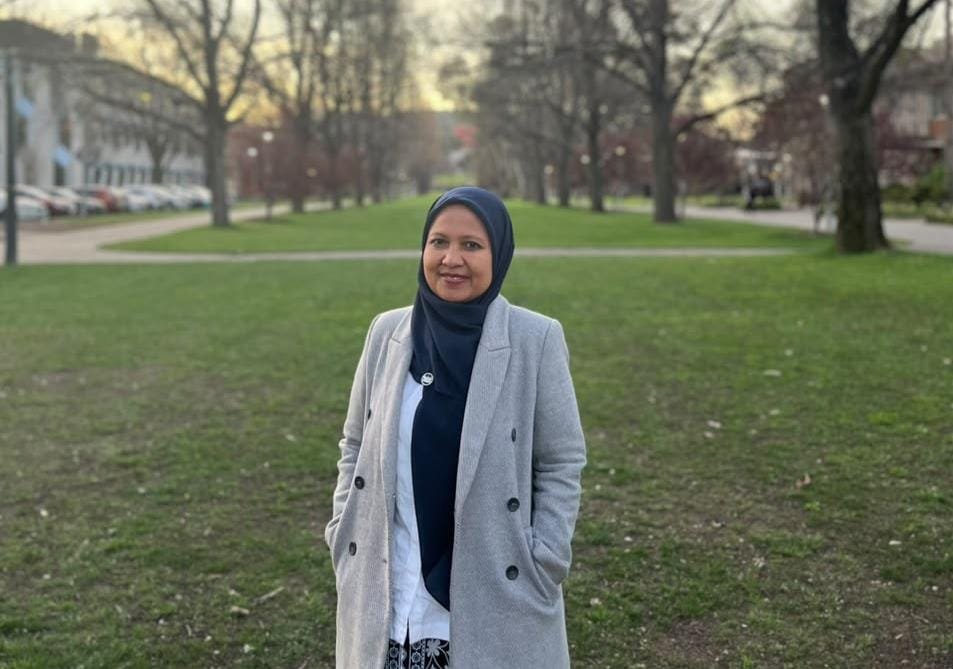
OPINION | JATIMSATUNEWS.COM: I had the opportunity to attend Indonesia Update 2026 at The Australian National University (ANU), Canberra, held over two days, on 18–19 September 2026. This annual Spring event brought together scholars from ANU and several other universities across Australia and Indonesia and Singapore, creating an intellectually stimulating forum for examining contemporary Indonesia from diverse disciplinary, geographical, and experiential perspectives. As a side event, the International Colloquium “The Futures of Indonesian Islam” was held at the same venue on Thursday, September 17, 2026, prior to the Indonesia Update.
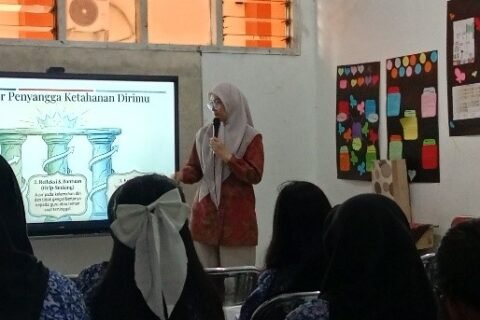
It gave me the opportunity to share my latest research on women and gender in the local context of East Java, together with my colleague, Dr. Devi Pramita, M.Pd. The colloquium was initiated and organized by Eva F. Nisa of ANU and Farid F. Saenong of the International Islamic University Indonesia (UIII), who also served as its conveners.
As a lecturer at a State Islamic University in Malang, East Java, Indonesia, who works on Islamic studies from interdisciplinary perspectives, I found participation in this academic gathering to be a distinctive intellectual experience. More importantly, this conference provided an opportunity to reflect on how Indonesia—with its profound diversity, complexity, and dynamism—is perceived, interpreted, and discussed simultaneously in the contemporary age by both insiders and outsiders of Indonesia.
From the perspective of outsiders, Indonesia is often approached through empirical observation and academic inquiry. Scholars examine its social, political, economic, cultural, and religious phenomena and seek to interpret these realities through the conceptual and methodological frameworks of their respective disciplines. Their approaches are shaped by particular theoretical traditions, comparative perspectives, and research experiences with particular methodologies, or their personal experiences and contacts with Indonesians in some respects.
Baca juga: IGIC, Indonesia Episentrum Baru Dunia Islam
The perspective of insiders, however, is often informed by lived experience, historical consciousness, national identity, collective memory, and intellectual traditions that have developed within the Indonesian context. Insiders do not merely observe Indonesian society; they are also part of the social, cultural, political, and religious realities that they seek to understand, my personal experience and thought are no exception.
The juxtaposition of these two positions—insider and outsider—therefore offers an important analytical lens for understanding contemporary Indonesia. Rather than producing a single and uniform interpretation, the encounter between these perspectives demonstrates that Indonesia, with its extraordinarily diverse social and cultural landscape, cannot be adequately captured through one-dimensional explanations.
Different positionalities, experiences, and disciplinary approaches inevitably generate different understandings of the same social realities.
For insiders, Indonesia Update can function as a “mirror” for reflection and self-evaluation. Listening to how Indonesia is examined and interpreted from outside the country provides an opportunity to critically reconsider assumptions that may have become familiar or taken for granted. External perspectives can sometimes reveal dimensions of Indonesian society that insiders may overlook precisely because they are immersed in them.
At the same time, such encounters can foster a deeper appreciation of Indonesia’s experience as a large and diverse nation. Indonesia’s ability to maintain a sense of national identity and cohesion amid considerable geographical, ethnic, linguistic, cultural, political, and religious diversity represents an important phenomenon worthy of continued reflection and scholarly attention.
Indonesia’s experience also demonstrates the ways in which a diverse society develops mechanisms to negotiate differences, respond to social transformation, and sustain forms of social and national cohesion. These processes are neither simple nor linear. They involve continuous negotiation among different interests, identities, values, institutions, and communities.
For outsiders, meanwhile, Indonesia offers a remarkably rich empirical context for academic inquiry. Its experiences raise important questions concerning democracy, religion, culture, social transformation, political economy, diversity, identity, and nation-building. Studying Indonesia can therefore contribute not only to a better understanding of Indonesia itself but also to broader comparative discussions on the complexity with which Islam is perceived, believed, and practiced across a diverse spectrum. This, if I may say so as an insider, demonstrates the universality of Islam itself. In this regard, I would like to cite the closing remark of one of our keynote speakers, who, in concluding his talk on Islam in Java, observed that “nothing is simple in Java.”
Jamilah




Komentar Pembaca
Belum ada komentar pada artikel ini. Jadilah yang pertama.
Minimal 10 karakter, maksimal 1000. Maksimal satu tautan. Semua komentar ditinjau redaksi sebelum tampil.